Small World Discoveries
by Tony Enticknap - tickspics
Focusing on insects, arachnids, fungus and other small nature subjects from East Dorset and the New Forest ...
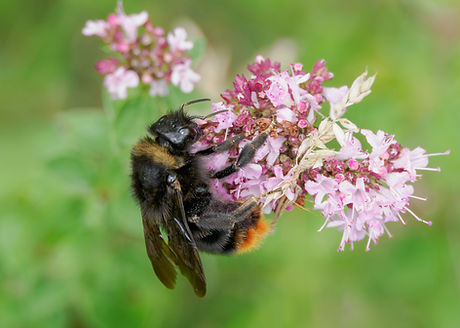
Bombus rupestris
Red-tailed Cuckoo Bee
HYMENOPTERA > APOCRITA | Aculeata > APOIDEA > Apidae
Bombus rupestris is primarily associated with areas of unimproved grassland or other flower-rich habitats where its host species Bombus lapidarius, the Red-tailed Bumblebee, occurs.
In early summer, the large impressive females which resemble their hosts, but can be easily recognised by their deep black shiny body and orange-red tail coupled with dark wings and large box-shaped head, will seek out an established nest site where it will attack and kill the resident queen. She will lay her eggs, initially female and then a little later male eggs, all of which will be reared by the resident Bombus lapidarius workers. After all of her eggs have been laid, she will die in the nest. Consequently, one of the best times to see the females is shortly after they come out of hibernation in late May or June when they're searching for a suitable host nest, flying low and slow across grassy banks emitting a hornet-like buzz. They will visit a variety of flowers including dandelions and comfreys. The new generation of adults emerge in late July or August and, at this time of year, the new females are drawn to Spear Thistle, Teasel and Knapweed.
The males are much smaller and somewhat variable in appearance, often paler with extensive yellowish-grey hairs on both the thorax and the abdomen, and with some individuals having an orange rather than red tail. On occasions they may be seen swarming on hillsides in courtship leks.
.jpg)
Kitt's Grave (rough grassland), East Dorset | July 25
.jpg)
Kitt's Grave (rough grassland), East Dorset | July 25

.jpg)
Kitt's Grave (rough grassland), East Dorset | July 25